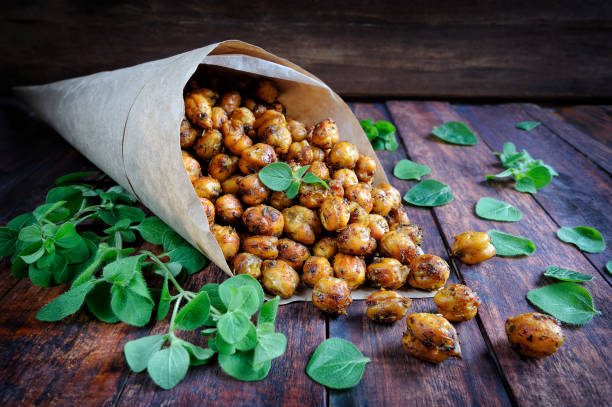
The Science of Crispiness: Why Most Chickpeas Go Soggy
Achieving the perfect crunch in a baked chickpea is a culinary holy grail. Many home cooks experience the frustration of pulling a seemingly crispy batch from the oven, only to find them soft and chewy an hour later. The culprit is always residual moisture. Chickpeas are incredibly dense legumes packed with starches that love to hold onto water.
Understanding the Maillard Reaction
To get that satisfying, glass-like shatter when you bite into a snack, you must trigger the Maillard reaction. This chemical process between amino acids and reducing sugars gives browned food its distinctive flavor. However, this reaction cannot occur if the surface of the chickpea is wet. Water turns to steam in the oven, effectively boiling the chickpea instead of roasting it. Eradicating surface moisture is the foundational step to success.

Essential Preparation: The Drying and Peeling Phase
Great snacks are made in the prep phase. If you are using canned chickpeas, you must first rinse them thoroughly to remove the aquafaba (the viscous liquid they are packed in). Aquafaba is an excellent egg substitute because of its protein structure, but left on your chickpeas, it will form a chewy film that prevents crisping.
To Peel or Not to Peel?
While peeling chickpeas is a tedious process, it is the ultimate game-changer for texture. The translucent outer skin acts as a moisture barrier, trapping steam inside the bean during roasting. By gently rolling the chickpeas between two clean kitchen towels, you can easily slip the skins off. Once peeled, allow the chickpeas to air-dry on a paper towel for at least 30 to 60 minutes before they ever see the inside of an oven.

The Ultimate Roasting Technique and Temperature Guide
The biggest mistake in roasting chickpeas is tossing them in oil and spices right out of the can. Oil acts as an insulator; if applied to a wet chickpea, it seals the water inside. The secret is the two-stage bake. First, roast the completely naked, dry chickpeas at 400°F (200°C) for 15 minutes. This dehydrates the exterior. Only then do you remove them, toss them in a high-smoke-point oil like avocado oil, and return them to the oven to crisp up.
| Roasting Method | Moisture Evaporation | Final Texture Result |
|---|---|---|
| Oil applied before baking | Poor (Oil traps water inside) | Chewy and soft after cooling |
| No oil used at all | Excellent | Dry, chalky, and tough |
| Two-Stage Bake (Oil added midway) | Optimal (Water escapes first) | Shatteringly crispy and rich |
Expert Flavor Combinations and Seasoning Timing
Spices are delicate and will burn violently if exposed to
