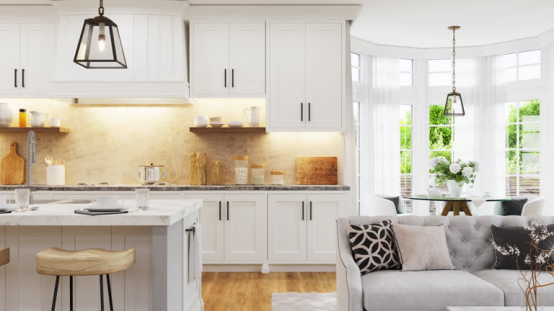
Understanding the Three Pillars of Kitchen Lighting
Effective kitchen illumination is never the result of a single light source. To achieve a professional-grade kitchen, you must implement a layered lighting strategy. This approach combines three distinct functional layers to ensure the room is safe for food preparation while remaining inviting for social interaction.
Ambient Lighting: The Foundation
Ambient lighting serves as the primary source of illumination, often referred to as general lighting. It replaces natural daylight and ensures that every corner of the kitchen is visible. Common fixtures include recessed cans, flush mounts, or track systems.
Task Lighting: Precision for Culinary Work
Task lighting is dedicated to specific high-activity zones, such as the prep counter, the stove, and the sink. Without proper task lighting, you risk working in your own shadow, which increases the likelihood of accidents with kitchen tools.
Accent Lighting: Adding Aesthetic Depth
Accent lighting is the “jewelry” of the kitchen. It highlights architectural features, glass-front cabinets, or artwork, providing depth and preventing the space from feeling sterile or purely industrial.

Strategic Implementation of Task Lighting Zones
The most critical aspect of kitchen design is the placement of light relative to the user. To maximize efficiency, task lighting must be positioned between the light source and the countertop surface.
Under-Cabinet Lighting Solutions
Under-cabinet lighting is the gold standard for prep areas. By installing LED strips or puck lights at the front edge of your cabinetry, you ensure that the light washes across the entire countertop rather than just the backsplash.
- LED Tape Lights: Offer a continuous, shadow-free glow.
- Puck Lights: Best for smaller, targeted areas or retrofitting existing cabinetry.
- Hardwired vs. Battery: Hardwired systems are preferred for longevity and integration into smart home ecosystems.

Advanced Design Principles and Color Temperature
The Color Rendering Index (CRI) and color temperature are often overlooked by homeowners but are vital for professional results. A high CRI (90+) ensures that the colors of your ingredients—and your finishes—appear true to life.
Selecting the Right Color Temperature
Color temperature is measured in Kelvins (K). The selection of Kelvin temperature dictates the mood of your kitchen.
| Temperature | Atmosphere | Best Use Case |
|---|---|---|
| 2700K – 3000K | Warm White | Cozy, traditional, or transitional kitchens. |
| 3500K – 4000K | Cool White | Modern, high-contrast, or industrial kitchens. |
For most residential kitchens, a neutral white in the 3000K to 3500K range provides the perfect balance between clinical clarity and homey warmth.

Smart Lighting and Automation Integration
Modern kitchen lighting is increasingly defined by its ability to adapt. Integrating smart controls allows you to transition the kitchen from a “prep mode” (bright, cool light) to a “dining mode” (dim, warm light) with a single voice command or smartphone tap.
Benefits of Dimmable Systems
Dimmers are the most cost-effective way to extend the lifespan of your bulbs and control the ambiance. By utilizing smart switches, you can create “scenes” that automatically adjust the brightness levels of your ambient and accent layers based on the time of day.
Frequently Asked Questions (FAQ)
- Q1: What is the ideal brightness for kitchen lighting?
- For general ambient lighting, aim for 30-40 lumens per square foot. Task areas require significantly more—up to 70-80 lumens per square foot—to ensure safety while chopping or cleaning.
- Q2: Can I mix different color temperatures in my kitchen?
- It is generally discouraged. Mixing 2700K and 5000K in the same line of sight creates a disjointed appearance. Stick to a consistent Kelvin rating across all fixtures for a cohesive look.
- Q3: Where should I place recessed lights for the best results?
- Avoid placing recessed lights directly behind you, as this will cast shadows on your work surface. Instead, place them slightly in front of the counter edge to direct light onto the workspace.
- Q4: Why does my kitchen look small and dark despite having lights?
- This is likely due to a lack of “layering.” If you only use overhead recessed lights, you create “cave-like” shadows on your counters. Adding under-cabinet lighting and accent lights will open up the space and remove those shadows.
