
Hotpot, a warm and communal culinary tradition, lies in the freshness and flavor of its ingredients. Of all the ingredients, meat is undoubtedly the star attraction. A good slice of hotpot meat should be as thin as a cicada’s wing, cooked instantly, and tender. But to achieve this standard, does it rely on culinary skill or the right tools?
This is a question that plagues many home cooks. We’ll take a closer look at the two methods: slicer and hand slicing , to help you find the best way to slice meat for hot pot.
The Art of Knife Cutting: Traditions and Challenges
For many people, slicing meat thinly with a sharp knife is a traditional skill that is both challenging and rewarding.
advantage:
Zero cost: You don’t need to buy any additional equipment, just a good kitchen knife.
Flexible operation: No complicated preparation and cleaning required, just pick it up and use it.
shortcoming:
Uneven thickness: Unless you’re a professional chef, it’s difficult to get consistently thin slices. Uneven thickness can lead to some slices being overcooked and others undercooked.
Inefficiency: A large gathering requires a large amount of meat slices. Cutting by hand is not only time-consuming and labor-intensive, but also causes wrist fatigue, which reduces the fun of meal preparation.
The taste is compromised: the uneven thickness directly affects the taste. You can’t experience the ultimate tenderness of the thin slices melting instantly on the tip of your tongue.
The power of the slicer: a combination of efficiency and precision
Home slicers are a product of the modern kitchen, designed for efficiency and quality.
advantage:
Ultimate uniformity and precision: this is the core advantage of the slicer. It can easily slice meat to 1mm or even thinner, with each slice having a consistent thickness. This ensures that all slices of meat reach their optimal taste at the same time when they are put into the pot.
High speed and high efficiency: In just a few minutes, you can easily cut enough meat for a whole family to enjoy, greatly saving meal preparation time.
Higher safety: Proper use of the slicer and hand guard can isolate your hands from the high-speed rotating blade, greatly reducing the risk of injury.
Professional-grade beauty: Thin and evenly sliced meat curls naturally on the plate, presenting a visual effect like that of a professional restaurant.
shortcoming:
Initial investment: Purchasing a slicer requires a certain budget.
Cleaning and storage: The machine requires regular cleaning and maintenance and takes up some kitchen countertop or storage space.
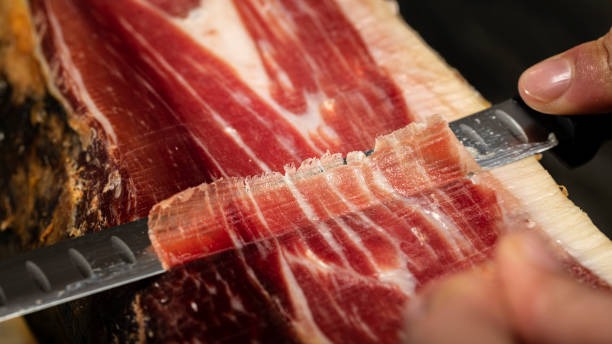
A direct comparison: slicer vs. hand cutting
| Features | Hand-cut (traditional) | Slicer (Modern) |
| efficiency | Low | high |
| Slice thickness | Difficult to control | Precise and controllable (up to 1 mm) |
| Taste consistency | Difference | Excellent |
| Security | Higher risk | high |
| Initial cost | Almost zero | There is investment |
| maintain | Simple | Needs cleaning and storage |
Export to Google Sheets
Final conclusion: How to cut meat slices for hot pot?
If you’re just in the mood for a simple hot pot meal at home, hand-slicing might be enough. But if you consider hot pot a ritual and want to enjoy the best dining experience every time, a slicer is undoubtedly the better choice .
It solves all the pain points of hand-cutting for you, ensures the extreme thinness and uniformity of the meat slices, and allows each piece of meat to be instantly cooked in the hot soup, bringing an impeccable fresh and tender taste.
With a slicer, every hot pot will be a high-quality taste feast. Are you ready to upgrade your hot pot experience?
