
When choosing a frozen meat slicer, motor power and safety features are certainly important, but the ultimate factor determining the quality of your slices is often the tiny blade. Different blade materials directly impact sharpness, durability, maintenance, and cost.
The three most common blade materials on the market are stainless steel, high-carbon steel, and ceramic. Each material has its own unique advantages and disadvantages, and there’s no absolute “best,” only “most suitable.” This guide will provide an in-depth analysis of the differences between the three, helping you make the most informed purchasing decision.
1. Stainless steel blades: the popular choice
Stainless steel blades are the most common and widely used type on the market and can be considered the “standard configuration” of home slicers.
Advantages: Good rust resistance: extremely strong corrosion resistance, not easy to rust after daily cleaning, simple maintenance.
Easy to clean : The smooth surface wipes clean easily, making it perfect for quick cleanup after frequent use.
High cost-effectiveness: The cost is relatively low, making it a budget-friendly choice.
shortcoming: Poor Edge Retention: Relatively soft, the blade does not hold as sharp an edge as carbon steel and requires more frequent sharpening to maintain peak performance.
Limited hardness: When dealing with harder frozen meats or cheeses, the slicing effect may be slightly worse than carbon steel.
Suitable for most home users. If you want a slicer that’s easy to use and clean, and doesn’t require extensive maintenance, a stainless steel blade is the best choice.
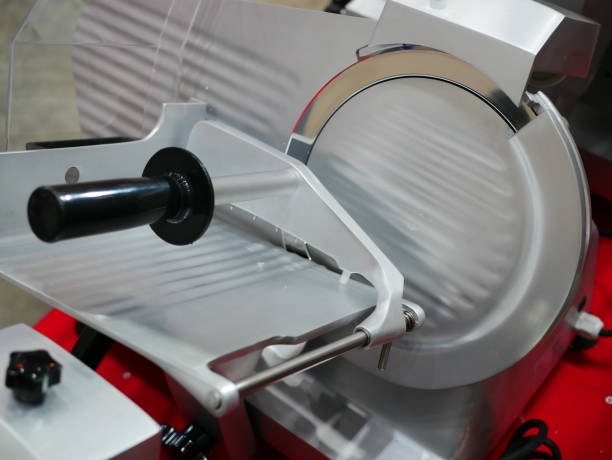
2. High carbon steel blade: a sharp weapon for professional players
High carbon steel blades are known for their exceptional hardness and sharpness, making them the preferred choice for many commercial slicers and professional knives.
Advantages : Extremely sharp: It has extremely high hardness and can be sharpened into a blade as sharp as a scalpel, making it easy to handle various frozen meats, hard sausages and cheeses.
Strong edge retention: can maintain sharpness for a long time, reduce the frequency of sharpening and improve work efficiency.
shortcoming: Rust-prone: Almost no rust resistance. Clean thoroughly and dry immediately after use. Apply food-grade mineral oil for maintenance if necessary.
High maintenance requirements: Careful daily maintenance is required, otherwise the blades will quickly oxidize, discolor, or even rust.
Brittle: High hardness means high brittleness, and the edge may chip if it is hit hard or dropped.
[Suitable for] Kitchen enthusiasts, food lovers, and users who pursue the ultimate slicing experience and are willing to invest time in meticulous maintenance.
3. Ceramic blades: fragile beauty
Ceramic blades have attracted much attention in the field of kitchen utensils due to their unique physical properties.
advantage: Unmatched Sharpness: Ceramic blades are extremely hard, can be sharpened to an extremely sharp edge, and will never rust.
No metallic taste: Will not react with food and preserves the original flavor of the ingredients.
Lightweight: Light material, easy to handle.
shortcoming: Extreme brittleness: This is its biggest drawback. Even the slightest impact can cause the blade to crack or break into pieces. The risk of chipping is particularly high when cutting hard ingredients such as frozen meat.
Difficult to sharpen by yourself: Ceramic blades require professional diamond sharpening tools and cannot be maintained by yourself at home.
Suitable for cutting soft, boneless ingredients only. Not recommended for use in frozen meat slicers, as the high risk of blade chipping may damage the machine and pose a safety hazard.
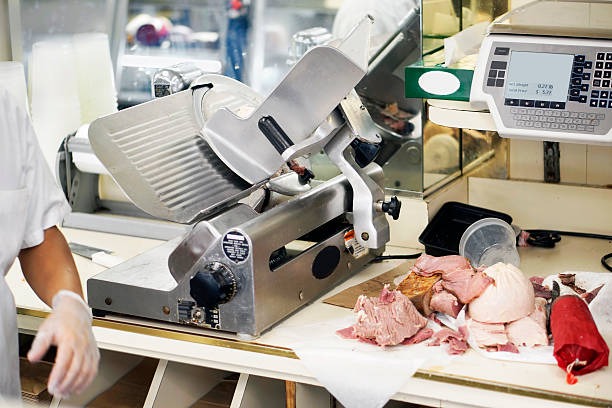
Comparison of blade materials
| Features | Stainless steel | high carbon steel | ceramics |
| Sharpness | good | excellence | excellent |
| Edge retention | generally | Excellent | excellent |
| Rust resistance | Excellent | Difference | Excellent |
| Durability | high | High (but prone to chipping) | Low (very fragile) |
| Maintenance difficulty | Low | high | Unable to maintain itself |
| Recommended group | The vast majority of home users | Users who pursue extreme sharpness | Not recommended for frozen meat |
Final Recommendation: Which Blade is Best for You?
For most home users seeking convenience and efficiency, stainless steel blades are the undisputed best choice. They offer the perfect balance of performance, durability, and maintenance, making them suitable for almost all daily slicing needs.
If you are an enthusiast who has extremely high requirements for the cutting experience and does not mind meticulous cleaning and maintenance after each use, then the high-carbon steel blade will bring you unparalleled sharpness.
As for ceramic blades , we don’t recommend them for cutting frozen meat. Although they are very sharp, their fragile nature makes them a great safety hazard in high-intensity cutting scenarios.
